Posted on

Pilot-scale decentralized bioelectric treatment of domestic wastewater

Pine Creek wastewater treatment plant

DOI: 10.13140/RG.2.2.10734.98888

Growing urban populations and rising demands on water infrastructure make decentralized wastewater treatment an urgent research priority. Conventional centralized plants are often energy intensive and limited in their ability to recover valuable resources.

Exploring integrated bioelectric systems offers a pathway to not only improve nutrient removal but also generate useful byproducts such as biogas and hydrogen. Pilot-scale studies are required to demonstrate feasibility, optimize reactor design, and assess performance under realistic operating conditions.

Researchers at the Mexican Institute of Water Technology (IMTA) in Jiutepec , Mexico, addressed the pressing need for sustainable, modular solutions. They recently published their pilot in the journal Bioprocess and Biosystems Enginee­ring. Their system could possibly serve households, hotels, and other facilities where both wastewater volumes and energy demands converge.

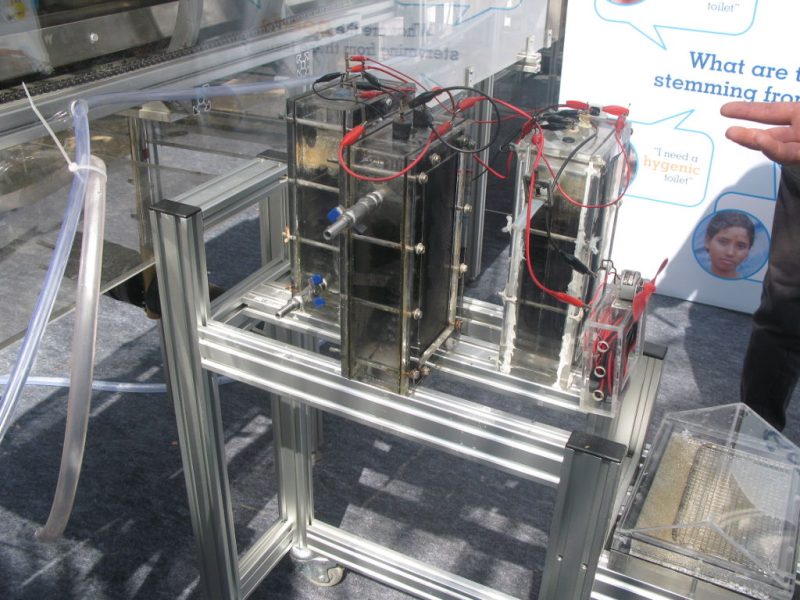
An integrated, decentralized treatment system consisting of an electrolysis reactor, an anaerobic biofilm reactor, and an aerobic moving-bed reactor was tested at pilot scale. The total volume was 50 liters, with 10.4 liters allocated to the electrolysis chamber. Domestic wastewater was treated while simultaneously producing hydrogen.

The system comprised the following individual reactors

  1. An electrolysis chamber with graphite felt anode and cathode and a cation exchange membrane (CMI‑7000S),
  2. A fixed-bed reactor with polyurethane foam as carrier material,
  3. An aerobic moving-bed reactor with modified LDPE carrier elements (≈1,500 m²/m³ specific surface area) and targeted aeration,
  4. A high-performance sedimentation unit.

The system was installed in a tank and operated under continuous flow at two different rates. The hydraulic retention time was 0.75 or 1.5 days. Applied voltages ranged from 0.7 to 1.0 V. Various organic loads (chemical oxygen demand, COD) of 0.2–0.44 kg/m³/d were also investigated.

Contamination Removal
COD 81–84%
BOD₅₀ 84–85%
TSS 76–88%
TN 53–68%
NH₄⁺ 88–98%
TP 11–30%

With increasing load, the treatment rated tended to decrease. Current densities reached up to 0.41 A/m² with a maximum hydrogen production rate of 0.007 L/L/d (absolute: 0.072 L/d). The higher voltage of 1.0 V promoted hydrogen formation as well as nitrogen and phosphorus conversions. A control phase without applied voltage was used to isolate the contribution of voltage to treatment performance.

This voltage-free control quantified the actual contribution of the electrochemical field. No current flow or hydrogen production occurred. Organic load removal continued, but only through conventional steps. Nitrogen and phosphorus conversions were significantly reduced, especially ammonium removal. Overall, the system showed lower treatment performance without applied voltage.

Microbial electrolysis in the combined system did not merely add passive biofilm volume. Under applied voltage it provided an independent functional contribution to nitrogen and phosphorus conversion and energy recovery. Without voltage, the microbial electrolysis cell behaved hydraulically like an additional reactor space but lost its added value as a bioelectric unit.

The study demonstrated that integrated bioelectrolysis combinations at small pilot scale can achieve high organic degradation rates and relevant nitrogen conversions, while simultaneously producing hydrogen or biogas. This makes the approach suitable as a low-energy, modular pre- and main treatment for domestic wastewater with potential for useful gas recovery. The hotel industry is particularly interesting as a market, given the necessary flow volumes and corresponding gas demand.

Phosphate removal was too low (11–30%) to meet regulatory requirements. Post-treatment in municipal wastewater plants remained necessary. Higher organic loads worsened nutrient and solids removal, making the system only partially suitable for industrial wastewater with higher loads. For discharge and reuse standards, additional post-treatment steps were also required in industrial applications.

The pilot-scale integration of bioelectric reactors into domestic wastewater treatment marks an exciting step toward industrialization of sustainable water management. By coupling high organic removal efficiencies with simultaneous hydrogen generation, this approach demonstrated how treatment systems can evolve from purely consumptive infrastructure into resource-recovering platforms.

At Frontis Energy we believe that, while challenges remain, particularly in phosphorus removal and scaling to higher organic loads, the promise of modular, low-energy systems that deliver both clean water and usable energy is compelling. The next phase will involve refining nutrient conversion, optimizing reactor design for larger volumes, and exploring real-world applications in sectors such as hospitality and decentralized communities. This trajectory points toward a future where wastewater treatment is not just a necessity but a driver of circular economy innovation.

Estrada-Arriaga, et al. 2024, Performance of a pilot-scale microbial electrolysis cell coupled with biofilm-based reactor for hou­sehold wastewater treatment: simultaneous pollutant removal and hydrogen production. Bioprocess and Biosystems Enginee­ring, 47, 1929–1950, DOI: 10.1007/s00449-024-03079-0

Posted on

Pilot-scale microbial fuel cells produce electricity from wastewater

In wastewater treatment, aeration is an energy-intensive but necessary process to remove contaminants. Pumps blow air into the wastewater to supply the microbes in the treatment tank with oxygen. In return, these bacteria oxidize organic substances to CO2 and hence remove them from the wastewater. This process is the industrial standard and has proven itself for over a century. If the researchers at Washington State University and the University of Idaho have their way, that is changing now.

In their project, the researchers used a unique microbial fuel cell system they developed to replace aeration. Their novel wastewater treatment system cleans wastewater with the help of microorganisms that produce electricity. These microbes are called electrophiles.

The work should one day lead to less dependence on the energy-intensive treatment processes. Most of the energy in such processes is consumed in the activated sludge and its disposal. The energy consumption in water treatment produces around 4-5% of anthropogenic CO2 worldwide. to put that in perspective, according to the Air Transport Action Group in Geneva, international air transport produced 2.1% CO2 in 2019. The researchers published their work in the journal Bioelectrochemistry. In addition to cutting green house gas emissions, lowering the energy consumption of wastewater treatment would save billions in annual operation and maintenance costs.

Microbial fuel cells allow microbes to convert chemical energy into electricity, much like in a battery. In wastewater treatment, a microbial fuel cell can replace aeration while capturing electrons from wastewater organics. These electrons themselves are in turn a waste product of the microbial metabolism. All living organisms strive to discharge their excess electrons. This process is known as respiration or fermentation. The electricity generated the microbes can be used for useful applications in the wastewater treatment plant itself. The technology kills two birds with one stone. On the one hand, the treatment of the wastewater saves energy. On the other hand, it also generates electricity.

Up until now, microbial fuel cells have been used experimentally in wastewater treatment systems under ideal conditions, but under real and changing conditions they often fail. Microbial fuel cells lack regulation that controls the potential of anodes and cathodes and thus the cell potential. This can easily lead lead to a system failure. The entire cell must then be replaced.

To tackle this problem, the researchers added an additional reference electrode to the system that enables them to control their fuel cell. The system becomes more flexible. It can either work as a microbial fuel cell on its own and consume no energy, or it can be converted so that less energy is used for aeration while it purifies the wastewater more intensively. Frontis Energy uses a similar control system for its electrolysis reactors.

The system was operated for one year without major issues in the laboratory as well as a pilot in a wastewater treatment plant in Idaho. It removed contaminants at rates comparable to those in a classic aeration tanks. In addition, the microbial fuel cell could possibly be used completely independent of grid power. The researchers hope that one day it could be used in small wastewater treatment plants, such as cleaning livestock farms or in remote areas.

Despite the progress, there are still challenges to be overcome. They are complex systems that are difficult to build. At Frontis Energy we specialize in such systems and can help with piloting and commercialization.
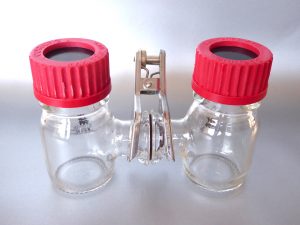

(Photo: Wikipedia / National University of Singapore)