Posted on

Advancing wastewater sustainability: Nafion-powered ammonium recovery

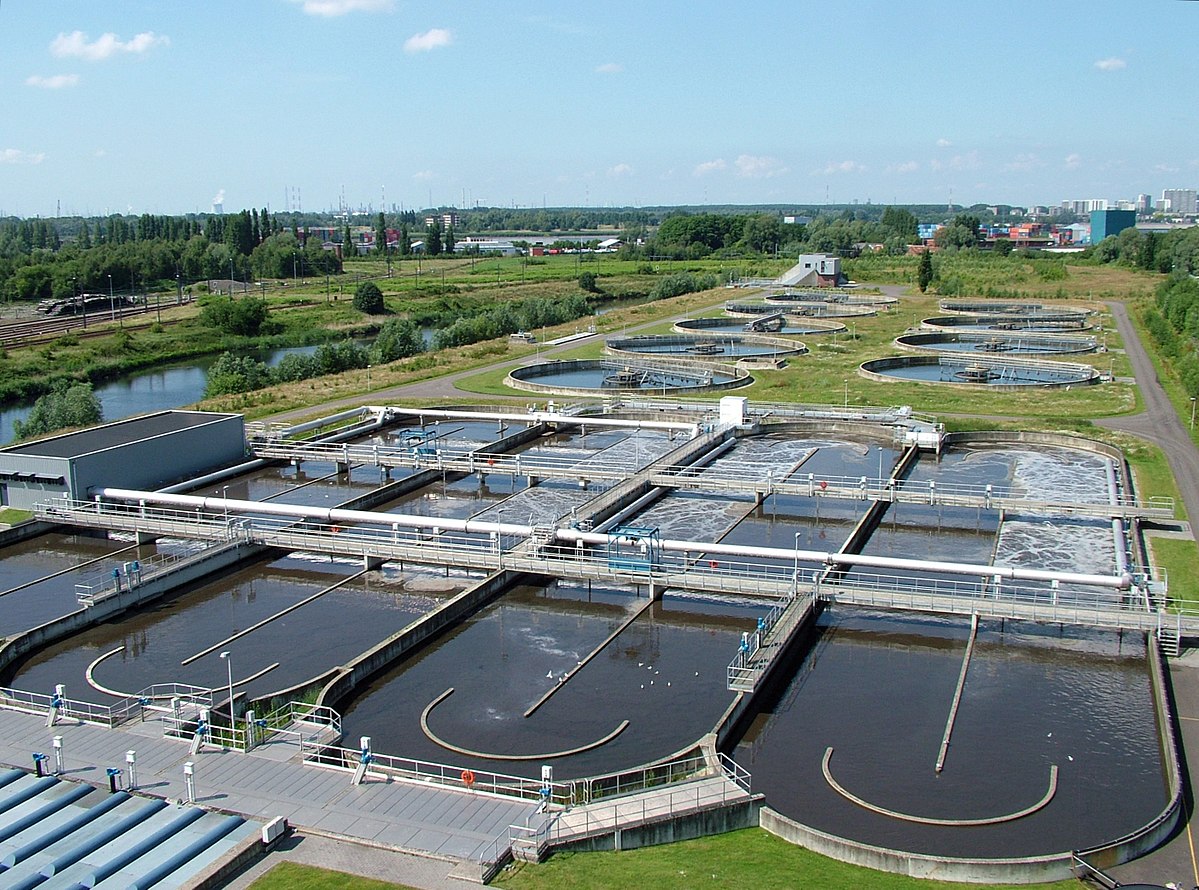
Wastewater treatment plant Bern

With global population growth and the resulting increase in environmental stress, the need for sustainable wastewater treatment is becoming ever more urgent. Traditional methods focus on removing pollutants but often overlook the opportunity to recover valuable resources. One such resource is ammonium. This nitrogen-containing molecule promotes growth and is a key component of fertilizers. When mishandled, such as through over-fertilization, ammonium becomes one of the main contributors to nitrogen pollution.

A promising solution lies in bioelectrical systems. This umbrella term refers to innovative technologies that not only purify wastewater but also recover resources like ammonium. At the same time, bioelectrical systems generate clean energy such as electricity or biogas. The technology is based on galvanic cells, where the two cell chambers are often separated by a membrane. High-performance cation exchange membranes enable precise ion transport and system stability. The premium product among cation exchange membranes is Nafion, such as our Nafion 115 membrane.

At Frontis Energy, we have demonstrated that bioelectrochemical systems can remove ammonium from wastewater, offering an energy-efficient alternative to the energy-intensive Haber-Bosch process. To validate this concept, we developed microbiological electrolysis cells populated with microorganisms from oxygen-deprived marine sediments off the coast of Namibia. These sediments are naturally rich in ammonia and low in organic carbon, ideal conditions for microbes capable of anaerobic ammonium oxidation. For comparison, we also used conventional municipal wastewater to populate the electrodes.

Maintaining anoxic conditions was crucial to avoid nitrification, a process that transfers electrons directly to oxygen, bypassing the anode and resulting in energy loss and reduced hydrogen production. Instead, we regulated the anode potential between +150 mV and +550 mV, well below the redox potential required for water oxidation (+820 mV). This configuration enabled the oxidation of ammonium to nitrogen gas (N₂) at the anode, while hydrogen (H₂) or methane gas was produced at the cathode.

Central to this process is Nafion 115, a membrane made of perfluorosulfonic acid polymers (PFSA polymers). Its exceptional proton conductivity, chemical resistance, and mechanical robustness make it ideal for demanding wastewater environments. Nafion 115 acts like a selective gate, allowing ammonium ions (NH₄⁺) to migrate from the anode to the cathode while blocking competing ions and maintaining anoxic conditions. This selective transport, driven by electric field gradients and concentration differences, ensures efficient nutrient recovery and stable performance of the bioelectrical system.

A practical validation of this technology comes from our earlier report, in which researchers developed a two-chamber, anoxic bioelectrical reactor that continuously removed ammonium at a rate of about 5 g/m³/day. Their system converted over 97% of the ammonium directly into nitrogen gas. This transformation occurred without the formation of harmful byproducts like nitrite or NOx gases. Particularly impressive was the energy consumption, just 0.13 kWh per kilogram of nitrogen removed. That is a 35-fold reduction compared to conventional aeration, which typically requires around 5 kWh/kg.

These results highlight the transformative potential of bioelectrical systems. As mentioned earlier, significant energy is used to remove nitrogen from wastewater, only to make it available again via the Haber-Bosch process, accounting for 1–2% of global energy consumption. Bioelectrical systems offer a circular alternative: by coupling ammonium oxidation with hydrogen production, wastewater treatment plants could become net energy producers. The generated hydrogen and biogas can be used directly for electricity generation and ultimately to reduce greenhouse gas emissions.

With the right biofilms, well-controlled electrode potentials, and robust membranes like Nafion 115, ammonium can serve as a clean, resource-efficient alternative to water electrolysis. This underscores the potential of bioelectrical systems to build a circular water economy, where waste is treated as a resource.

This technology reflects Frontis Energy’s commitment to promoting clean, efficient, and circular solutions that turn ecological challenges into sustainable opportunities.

Image: Wastewater treatment plant Bern

Posted on

Global wastewater resources estimated

In our last post on water quality in China, we pointed out a study that shows how improved wastewater treatment has a positive effect on the environment and ultimately on public health. However, wastewater treatment requires sophisticated and costly infrastructure. This is not available everywhere. However, extracting resources from wastewater can offset some of the costs incurred by plant construction and operation. The question is how much of a resource is wastewater.

A recent study published in the journal Natural Resources Forum tries to answer that question. It is the first to estimate how much wastewater all cities on Earth produce each year. The amount is enormous, as the authors say. There are currently 380 billion cubic meters of wastewater per year worldwide. The authors omitted only 5% of urban areas by population.

The most important resources in wastewater are energy, nutrients like nitrogen, potassium and phosphorus, and the water itself. In municipal wastewater treatment plants they come from human excretions. In industry and agriculture they are remnants of the production process. The team calculated how much of the nutrient resources in the municipal wastewater is likely to end up in the global wastewater stream. The researchers come to a total number of 26 million tons per year. That is almost eighty times the weight of the Empire State Building in New York.

If one would recover the entire nitrogen, phosphorus and potassium load, one could theoretically cover 13% of the global fertilizer requirement. The team assumed that the wastewater volume will likely continue to increase, because the world’s population, urbanization and living standards are also increasing. They further estimate that in 2050 there will be almost 50% more wastewater than in 2015. It will be necessary to treat as much as possible and to make greater use of the nutrients in that wastewater! As we pointed out in our previous post, wastewater is more and more causing environmental and public health problems.

There is also energy in wastewater. Wastewater treatment plants industrialized countries have been using them in the form of biogas for a long time. Most wastewater treatment plants ferment sewage sludge in large anaerobic digesters and use them to produce methane. As a result, some plants are now energy self-sufficient.

The authors calculated the energy potential that lies hidden in the wastewater of all cities worldwide. In principle, the energy is sufficient to supply 500 to 600 million average consumers with electricity. The only problems are: wastewater treatment and energy technology are expensive, and therefore hardly used in non-industrialized countries. According to the scientists, this will change. Occasionally, this is already happening.

Singapore is a prominent example. Wastewater is treated there so intensively that it is fed back into the normal water network. In Jordan, the wastewater from the cities of Amman and Zerqa goes to the municipal wastewater treatment plant by gravitation. There, small turbines are installed in the canals, which have been supplying energy ever since their construction. Such projects send out a signals that resource recovery is possible and make wastewater treatment more efficient and less costly.

The Frontis technology is based on microbial electrolysis which combines many of the steps in wastewater treatment plants in one single reactor, recovering nutrients as well as energy.

(Photo: Wikipedia)