Posted on

Life cycle analysis of natural graphite

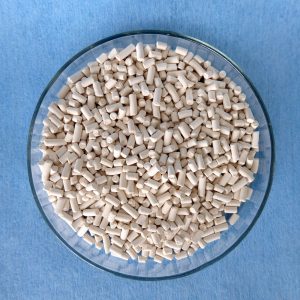
Natürliches Graphitgranulat aus einer österreichischen Mine

In the production of lithium-ion batteries, not only lithium is a crucial raw material, but also graphite. The widespread use of graphite is attributed to its low price, natural availability, high energy and power density, and long lifespan. This makes graphite a very advantageous choice for anodes in lithium-ion batteries.

As alternatives to lithium-graphite anodes, silicon anodes have been explored in recent years due to their high theoretical capacity, availability, and low cost. However, issues such as volumetric expansion and reliability reduce the chances of successful commercialization, especially in electric vehicles.

Battery-grade anode active material is derived from naturally mined or synthetic graphite. Graphite from natural ores generally has lower production costs but also lower purity and quality. Its anisotropic crystal structure can impair performance in lithium-ion batteries, even though it often allows for higher capacities. However, this advantage typically comes with a reduced lifespan.

In contrast, synthetic graphite is more expensive to produce but offers significantly higher purity and consistency. Synthetic graphite is obtained from carbon precursors such as petroleum coke or coal tar. Due to its higher purity, it accounted for a higher market share of 60% of global revenue in 2025. The higher revenue share is also attributed to higher prices.

Due to its isotropic crystal orientation, synthetic graphite possesses better thermal stability, lower thermal expansion, and faster lithiation kinetics. As a result, it provides overall stronger battery performance and a longer lifespan, although it typically has lower capacities.

As the global battery market grows, its supply chain must also be robust and sustainable. Canada has rich resources of natural graphite, which is mined and processed in the province of Quebec. To better understand the environmental impacts of this new supply chain, a sustainability analysis was conducted for one graphite mine and one graphite processing facility in Quebec by researchers at Concordia University in Montreal. The results were recently published in the journal MDPI Batteries.

The study integrated site-specific data on mining and processing (2022–2025) with Ecoinvent in OpenLCA and mainly focuses on the potential for greenhouse gas (CO₂ equivalents) reduction and water usage.

The researchers showed that the production of one ton of anode-capable graphite in Quebec generates approximately 1.44 tons of CO₂ equivalents. This is significantly less than the 9.6 tons of CO₂ generated per ton of Chinese graphite. Therefore, the sustainability analysis in Quebec indicates a significant reduction in carbon intensity.

The modeled chain included open-pit mining through drilling, blasting, and hauling, as well as processing through crushing, grinding, flotation, and dewatering. Finally, the final processing of anode-capable graphite through micronization and spheronization, acid leaching purification, and carbon coating, followed by finishing and packaging, was also investigated. Spheronization converts the concentrate into spherical graphite granules to enhance bulk density and packing efficiency in the anode. Significant by-products are generated, e.g., as fine particles.

Within the processing facility in Quebec, micronization and spheronization, as well as purification and coating, are the most energy-intensive steps. Acid leaching purification also represents the largest single contributor to CO₂ and water scarcity impacts. However, the very low carbon intensity of the grid (hydropower) significantly mitigates the footprint of these electrical loads. In contrast, natural gas used for high-temperature purification and coating remains the largest direct source of CO₂.

The CO₂ emissions from mining are mainly caused by diesel in trucks and heavy equipment. Detailed equipment data showed that hauling dominates fuel consumption. Water impacts at the concentrator are elevated due to flotation and waste treatment. However, a closed water system and dedicated wastewater treatment reduced fresh water intake and stress from waste effluent.

The researchers also interpreted the results of their sustainability analysis to assess impacts, identify sustainability focal points, and determine the phases with the highest resource intensity and the highest emissions profiles. This analysis facilitated the representation of environmentally burdensome intermediate steps. Natural gas used for purification and coating in the processing facility was the largest source of CO₂, followed by diesel and electricity consumption.

In addition to graphite, the extraction of lithium and trace elements also plays a significant role in the sustainability of batteries. However, these were not the focus of the study. Nevertheless, graphite dominates the market for anode materials, accounting for up to 98% of the market share, while Li4Ti5O12 makes up only about 2%.

The study concluded with an integrated synthesis of the results and provided targeted recommendations for process optimization, emission reduction, and improving sustainability throughout the entire supply chain. This systematic and transparent methodology ensured a robust assessment of the environmental impact of the production of anode-grade graphite.

Despite the significant reduction in CO₂ emissions compared to graphite extraction and processing in China, the research highlights further opportunities for improvement. In particular, electrification of mining equipment to reduce diesel consumption and minimizing or substituting natural gas consumption during cleaning and coating at the facility could further decrease CO₂ emissions.

At Frontis Energy, we are closely monitoring the decarbonization and diversification of supply chains and provide products from various sources

Vegh, et al., 2026, Toward sustainable anode materials: LCA of natural graphite processing in Québec, MDPI Batteries, 12, 68. DOI: 10.3390/batteries1202006

Image: Natural graphite from an Austrian mine

Posted on

CO2-neutral traffic

Fossil fuels have made tremendous social and economic advances pssible. This becomes clear, among other things, if you look at the increase in road traffic. Around 90 million vehicles were produced in 2019. In 2000 it was 60 million. It is assumed that the number of vehicles produced by 2030 will grow to 120 million. The increase in road mobility undoubtedly has a positive impact on social mobility and economic growth. However, this also makes the traffic increase a self-accelerating process. Economic growth in the Brics countries (Brazil, Russia, India, China and South Africa) is particularly crucial in this regard. At the same time, it is expected that the proportion of electric vehicles, including hybrids, will also increase sharply. However, whether this is realistic, given the limited lithium reserves, can again be doubted.

In 2010 more than 1 billion cars were registered worldwide. With an annual increase of around 3%, it was already 1.3 billion in 2019. These emit around 6.0 billion tons of CO2 annually (out of a total of 33 billion tons worldwide), making them the largest expanding source of CO2. Energy-related CO2 emissions are generally continuing to rise, although this increase was briefly interrupted by the global health crisis of 2020. In addition, there are 20 to 30% of emissions from the production of fuels and the manufacture and disposal of vehicles.

Life cycle analyzes of vehicles with different drive concepts are the subject of many studies. When it comes to CO2 emissions, the energy source is crucial. Two main developments are discussed today: the electrification of the propulsion system (i.e. fully and partially electrified vehicles) and the electrification of fuels (i.e. hydrogen and synthetic fuels).

In the manufacture of synthetic fuels, water is broken down into oxygen and hydrogen by electrolysis with renewable electricity. Due to the temporary oversupply of renewable electricity, this energy is particularly cheap. The hydrogen can then be used in hydrogen vehicles propelled by fuel cells. Alternatively, CO2 can be converted into hydrocarbons with hydrogen and then used in conventional combustion engines in a climate-neutral manner. The advantage of fuel cell vehicles is their high efficiency and the low cost of electrolysis. The disadvantage is the lack of a hydrogen infrastructure. Converting from hydrocarbons to hydrogen would cost trillions. The cheaper alternative would be synthetic hydrocarbons. However, the development is still in its infancy and the production of synthetic fuels cannot yet be carried out on a large scale.

Hydrogen and synthetic fuels are a necessary addition to electromobility, especially for long-distance and load transport. The widespread view that the low level of efficiency of internal combustion engines makes these fuels uninteresting ignores the possibility of using them to store and transport energy and to enable climate neutrality for air and shipping traffic. If you compare the CO2 emissions from electric motors and electrified fuels, it becomes clear that these mainly depend on the CO2 pollution of the electricity used.

Synthetic fuel sources

The production of synthetic fuel requires renewable electricity, water and CO2. The technical processes are known. However, the first large-scale industrial plants are only in the planning phase. However, pilot projects such as that of the Canadian company Carbon Engineering have shown the technical feasibility of scaling. The generation costs depend mainly on the size of the plant and the electricity price, which results from the local conditions, the structure of the electricity market and the share of renewable electricity.

The decentralized production of these fuels brings not only climate neutrality but also geopolitical gains. Since CO2 and renewable energy – in contrast to lithium – are generally accessible resources, users of this technology become independent of energy imports. At Frontis Energy we think these are strong arguments in favor of synthetic fuels.